

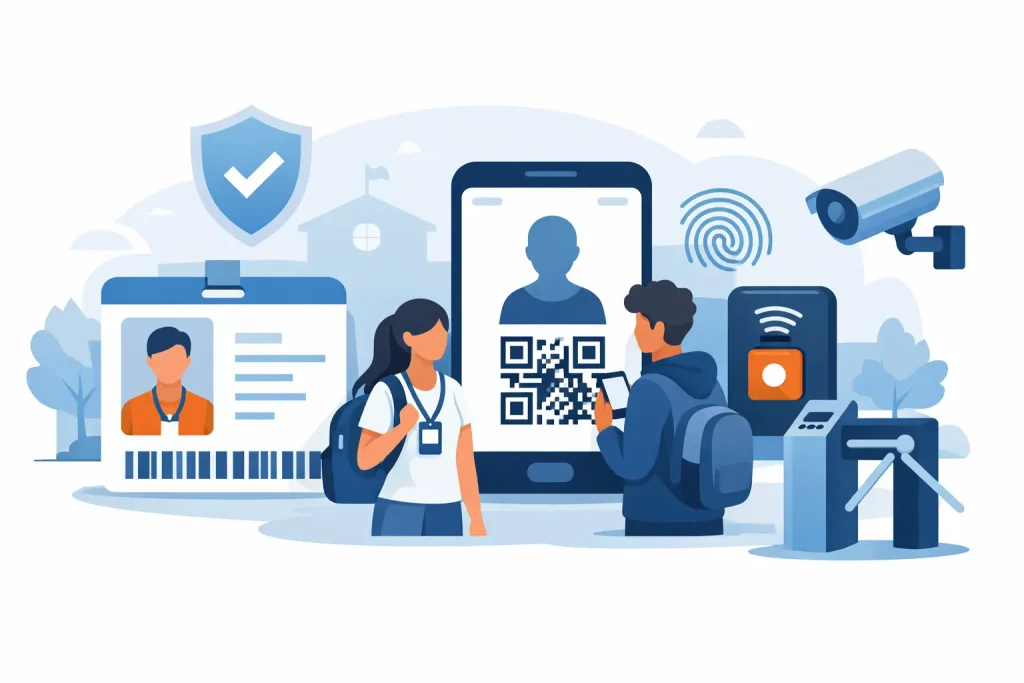
A school office can lose a surprising amount of time chasing the same problem: who is on site, who should be in a restricted area, and how quickly staff can identify students, visitors and contractors. That is why choosing the best ID solutions for schools is not just about printing a card. It is about safety, daily administration, brand consistency and making the whole system easy to manage.
Schools tend to need more than one ID product working together. A photo card on its own may be enough for a small campus with low visitor traffic. A larger school may need staff cards, student cards, visitor passes, lanyards, card holders and colour-coded accessories to keep movement clear at a glance. The right setup depends on how your campus operates, how often cards are replaced, and how much wear-and-tear those items will face.
What the best ID solutions for schools need to do
The strongest school ID setups handle three jobs at once. First, they make identification immediate. Staff need to recognise authorised people quickly, especially at reception, pick-up zones, excursions and events. Second, they need to hold up to daily use. Student cards get bent, dropped, stuffed into bags and worn in all weather. Third, they need to be easy to reorder and maintain without creating extra admin.
That last point matters more than many schools expect. If replacing lost cards is slow, or if ordering accessories means dealing with multiple suppliers, small delays turn into ongoing workload. Procurement teams and administrators usually get better results when the full package is considered upfront rather than buying cards first and solving the rest later.
Student ID cards: the base layer
For most schools, the starting point is a printed plastic or PVC card. This remains the most practical format because it is durable, easy to personalise and suitable for everything from visual identification to library borrowing and attendance systems.
The design should be clear before it is clever. Student name, photo, year level and school branding need to be easy to read at a glance. If the card will also be used with scanners or access systems, barcode or encoded elements need enough space and print clarity to function properly. Overcrowding the card often causes problems later.
There is also a trade-off between replacement cost and lifespan. A cheaper card may look fine at issue, but if it cracks or fades too quickly, the real cost rises once reprints start. Schools issuing cards to hundreds or thousands of students usually benefit from choosing a product that can cope with constant handling.
Staff identification needs a different approach
Staff IDs usually work harder than student cards. They are worn daily, shown to visitors, used across shared spaces and often tied to access control. Because of that, the best ID solutions for schools usually separate staff card design and accessories from student issue.
A professional-looking staff ID supports both security and parent confidence. Clear role titles such as Teacher, Admin, Facilities or Contractor can help on busy campuses. Colour coding can also reduce confusion. A different lanyard colour for staff, leadership and external contractors gives office teams a fast visual check without stopping people every time.
For schools with strict brand standards, matching house colours or official school colours matters as well. That is not just cosmetic. Consistent branding across cards and lanyards makes the whole system look intentional, which improves adoption internally.
Lanyards are not a minor add-on
Schools often treat lanyards as an afterthought, but they are one of the most visible and heavily used parts of the system. A card that stays in a pocket is less useful than one worn clearly and comfortably.
Comfort and practicality should lead the decision. Staff wearing IDs all day need lanyards that are durable and comfortable around the neck. Students may need a simpler option depending on age group and school policy. Safety breakaways can be important in many school environments, particularly where active movement is part of the day.
Custom printed lanyards also give schools control over visibility and identity. School names, logos and exact PMS-matched colours make it much harder for generic items to blend in. For administrators, that creates a practical benefit: authorised IDs are easier to spot from a distance, particularly during assemblies, sports carnivals, excursions and parent events.
Card holders, reels and clips reduce replacement costs
One of the quickest ways to improve card lifespan is to protect the card properly. Rigid card holders are a strong fit where cards need to stay flat and readable. Soft holders can work well where flexibility matters more and costs need to stay tighter. The choice depends on how cards are used day to day.
If staff need to swipe or present cards regularly, reels can be more efficient than removing a card from a holder. In schools with gates, staff rooms, print release or library systems, that can save time and reduce wear on the card itself. Clips can be useful in some settings too, though they tend to be less secure and less visible than a lanyard setup.
This is where a joined-up purchasing approach pays off. A school that orders quality cards but pairs them with flimsy holders often ends up replacing both sooner than planned. The product mix needs to work together.
Visitor and contractor passes should be simple
Not every person on site needs a permanent plastic card. Casual visitors, guest speakers, maintenance teams and relief staff usually need a temporary solution that is quick to issue and easy to recognise.
For many schools, the most practical system is a combination of pre-printed visitor passes and colour-coded holders or lanyards. Reception staff can issue them fast, collect them at departure and maintain a clear visual distinction from students and permanent staff. If your school hosts regular events or high parent traffic, this can reduce confusion significantly.
Temporary solutions should still look controlled. Handwritten stickers and mixed badge styles can create an untidy system that weakens security rather than supporting it. A consistent pass format sends a clearer message about site management.
Access control changes the buying criteria
If your school uses cards for door access, cashless canteen payments, printing or attendance tracking, the specification matters more. Print quality is still important, but compatibility becomes the bigger issue.
This is where schools need to be careful not to buy purely on unit price. A card that is not suited to your existing system can create delays, rework and extra costs very quickly. Before ordering, confirm exactly how the card will be used, what technology is required and whether accessories like holders or reels will interfere with scanning.
For procurement teams, a supplier that can support design, pre-production checks and reliable turnaround can remove a lot of pressure. That is especially useful when you are managing term deadlines or a new-starter intake.
How to choose the best fit for your school
The best ID solutions for schools are usually the ones that match your daily reality, not the most complicated option available. Start with three practical questions: who needs to be identified, how often the ID will be used, and what level of durability the environment demands.
A primary school with simpler access needs may prioritise visitor management and clear staff identification. A secondary school may need stronger student card durability and more structured colour coding. A K-12 campus may need a layered approach across multiple user groups. There is no single product that suits every school equally well.
It also helps to think about ordering beyond the first run. Can replacements be handled quickly? Can branding stay consistent across future batches? Can accessories be reordered without starting from scratch? Those details affect long-term cost just as much as the initial quote.
For many Australian schools, the most efficient approach is to source cards, lanyards and holders as one coordinated system. It cuts down admin, improves consistency and gives staff a setup they can use immediately rather than patching together bits from different suppliers. That is the kind of practical support schools usually need most.
A good school ID system should make the day easier from the front office to the classroom gate. If it helps your team identify people quickly, holds up under pressure and is easy to reorder when numbers change, it is doing its job properly.