

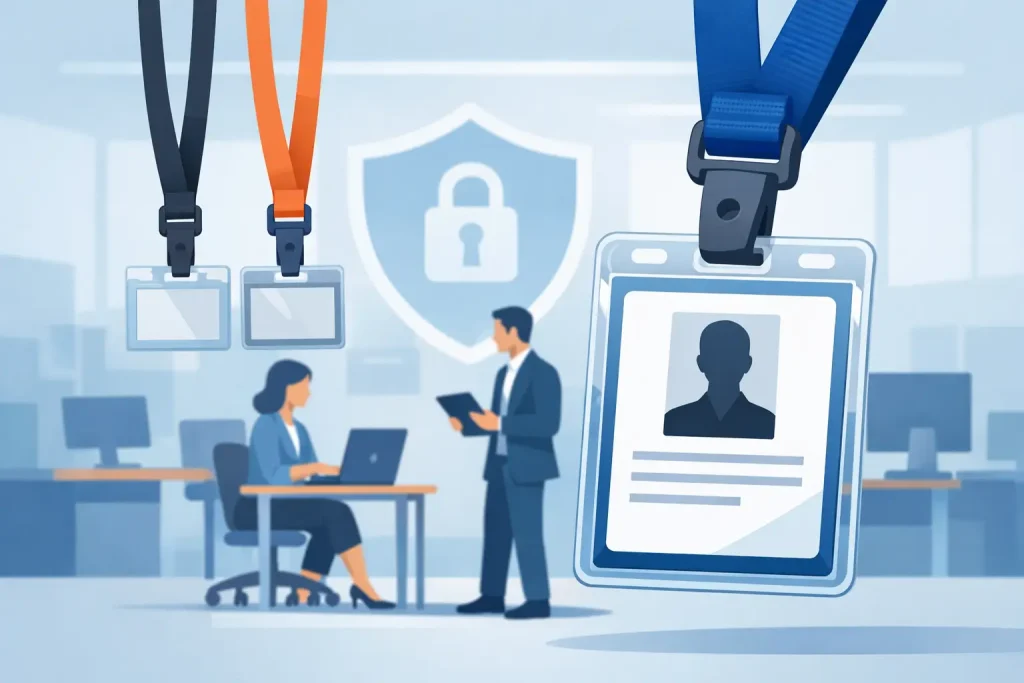
A visitor walks through reception wearing a generic badge on a cheap clip. By lunchtime, the card has twisted backwards, the name can’t be read, and nobody is quite sure which areas they should be in. That is exactly where secure ID lanyards for workplaces stop being a basic stationery item and start doing real operational work.
For offices, schools, hospitals, warehouses and event venues, ID display needs to do three jobs at once. It needs to keep credentials visible, support site security, and hold up to daily wear without becoming a hassle for staff. If one of those fails, the whole system becomes harder to manage. The right lanyard setup reduces confusion at entry points, helps teams identify people quickly, and gives your organisation a more controlled, professional presentation.
What makes secure ID lanyards for workplaces actually secure?
Security is not just about attaching a card to a strap. It comes down to how the full system works in practice – the lanyard, attachment, card holder and badge itself all matter.
A secure workplace lanyard should keep the ID card facing outward, stay attached during normal movement, and be difficult to swap, lose or misuse. That sounds simple, but there are trade-offs. A warehouse team moving around machinery may need a different setup from corporate front-of-house staff. A school may prioritise easy visual identification, while a venue may need stronger access control with barcode or RFID cards.
This is why procurement teams usually get better results when they treat lanyards as part of a broader identification system, not a standalone product. The strongest outcome comes from matching the printed lanyard, card style, holder type and attachment to the environment.
Where security problems usually start
In many workplaces, the issue is not that no ID system exists. The issue is that it was chosen for price alone, or copied from another site with completely different conditions.
Thin, low-quality straps can fray early. Weak clips can fail under daily use. Card holders that are too loose may allow the card to slip out, while holders that are too rigid for the card type can crack. If branding is poor or inconsistent, it also becomes harder for staff to spot who belongs on site and who does not.
There is also the visibility problem. If an ID card sits too low, flips around, or gets covered by clothing, it loses much of its value. Security staff, reception teams and line managers should not have to ask repeatedly to see a badge. A good lanyard setup makes compliance easier because it fits naturally into the workday.
Choosing the right attachment and holder
The attachment point is often where performance is won or lost. A swivel hook is a common option because it helps the card sit better and move less awkwardly. A bulldog clip can work in some settings, but it depends on the card format and holder style. Trigger clips may be better where a firmer connection is needed.
Then there is the holder itself. Soft plastic holders can be practical for lighter-duty use and straightforward card display. Rigid card holders offer more protection when cards are handled often, tapped on readers, or carried across tougher sites. If staff need to scan cards regularly, a holder with thumb slot access can save time. If the card contains smart technology, the holder should suit that use rather than obstruct it.
This is one of those areas where cheap substitutions create long-term friction. Saving a small amount on holders can lead to damaged cards, repeated reissues and inconsistent presentation across teams.
Breakaway features, reels and site-specific needs
Not every workplace should use the same lanyard configuration. In some environments, a breakaway safety clasp is the better choice because it reduces risk if the lanyard is pulled or caught. That can matter in schools, manufacturing settings, healthcare sites and active workplaces where staff are moving around equipment or working closely with others.
Card reels are useful when staff need to tap or scan frequently without removing the badge. They are popular in offices, hospitals and secure access sites for that reason. But they are not ideal in every context. If the reel quality is poor, retraction fails quickly. If staff are very mobile, reels can also add another point of wear.
The best setup depends on how people actually use their ID across a full day. Procurement decisions work better when they are based on movement, frequency of scanning, safety requirements and the appearance expected on site.
Branding matters more than many buyers expect
Security and branding are often treated as separate decisions. In practice, they support each other.
A clearly branded lanyard makes it easier to identify authorised staff and distinguish them from visitors, contractors or attendees. It also presents a more organised image to clients, students, parents and the public. For larger organisations with multiple departments or campuses, colour coding can help teams identify roles or access levels at a glance.
That only works if colours are consistent. For organisations with brand guidelines, approximate shades are not good enough. PMS matching matters when lanyards need to align with uniforms, signage or existing collateral. For many buyers, this is not about aesthetics alone. It is about control, consistency and making the ID system easier to recognise.
Secure ID lanyards for workplaces should be built for daily use
Staff notice quickly when lanyards are uncomfortable, too narrow, too rough against the neck, or awkward with clothing and uniforms. If they dislike wearing them, compliance drops. That is why material choice matters just as much as print.
A satin-style finish may suit corporate or event-facing roles where presentation matters. A polyester option may be more suitable where durability and value are the priority. Wider lanyards can improve visibility and comfort, but they may be less practical in roles that involve a lot of movement. Narrower lanyards can feel lighter, though they provide less print area.
There is no single best option for every workplace. A front desk team, a school staff group and a logistics site may all need different specifications. Good buying decisions come from balancing wearability, print clarity, security requirements and budget rather than chasing one feature in isolation.
Why the supply process matters as much as the product
A secure ID setup is only useful if the ordering process is reliable. This is where many organisations lose time. Artwork gets delayed, colours are not matched properly, approvals go back and forth, and delivery dates slip. That creates pressure internally, especially when onboarding staff, opening a new site or preparing for an event.
Working with a supplier that can manage the job from design support through to pre-production samples and delivery removes a lot of that burden. It gives office managers, HR teams and procurement staff a clearer path to sign-off. It also reduces the risk of receiving a product that looked acceptable on paper but does not work well once it is in people’s hands.
For organisations ordering in volume, consistency between batches matters too. The next order should match the last one in print quality, attachment style and finish. If you are issuing ID products across multiple locations, that consistency becomes even more valuable.
Think beyond the lanyard itself
Secure identification rarely stops at the strap. Many workplaces need the full combination of printed lanyards, PVC cards, card holders, reels, clips and sometimes wristbands for temporary access. Buying these items together usually leads to a better fit across the system and less internal admin.
It also helps when one supplier can cover customisation properly, manage deadlines, and quote clearly against volume. For Australian organisations balancing presentation, security and cost, that kind of service is not a bonus. It is part of making the project run smoothly.
Lotsa Lanyards works with organisations that need exactly that – dependable production, strong turnaround times, and custom branding that stays on brief without creating extra work for the buyer.
If you are reviewing your current setup, the best place to start is not with a catalogue page. Start with how your staff move, how your visitors are identified, and where your current ID process breaks down. Once that is clear, choosing secure ID lanyards becomes much simpler, and the result is far more useful on the ground.