
When you are ordering lanyards for a conference, school rollout, staff ID programme or national event, delivery is not a side issue. It is part of the product. A lanyard that arrives late, arrives with the wrong attachment, or turns up in the wrong shade of your brand colour creates more work than it solves.
That is why buyers looking for custom lanyards Australia wide delivery are usually not just comparing artwork options. They are looking for a supplier that can manage the full job properly – design support, pre-production checks, print quality, attachments, packing and dispatch – without leaving their team to chase every detail.
What matters when ordering custom lanyards Australia wide delivery
If your order needs to reach multiple offices, a regional campus, or an event venue on a fixed date, the real buying decision comes down to reliability. Price matters, of course, but procurement teams and event organisers know that the cheapest option becomes expensive when deadlines slip or specifications are missed.
The strongest suppliers make the process predictable. That means clear quoting, practical advice on lead times, and production systems that can handle both straightforward repeat orders and more detailed branded work. It also means understanding that custom lanyards are often only one part of a larger identity or event pack.
For some organisations, the lanyard is tied to printed PVC cards, card holders, reels, clips or wristbands. Ordering those items through separate vendors may look manageable at first, but it often creates delays, inconsistent branding and avoidable back-and-forth. A single supplier can reduce that operational burden significantly.
Why delivery coverage changes the buying decision
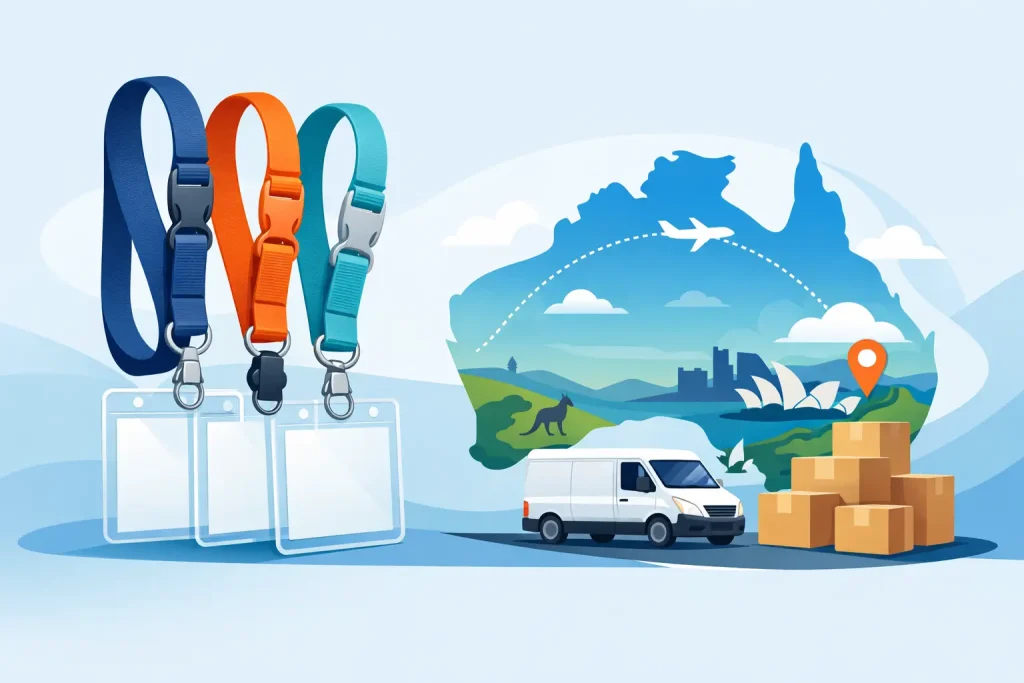
Australia-wide delivery is not simply a line on a website. It affects how confidently you can plan a launch, enrolment period, exhibition or internal rollout. If you are coordinating staff across different states or running an event outside a capital city, dependable dispatch and realistic timing become essential.
There is also a difference between a supplier that can technically send parcels nationwide and one that is set up to manage national orders well. The latter will ask the right questions early. When do you need the order? Is there a hard event date? Do you require pre-production approval? Are there multiple components that need to arrive together? Will exact PMS matching matter for brand compliance?
Those details shape the outcome. They also show whether the supplier is focused on execution rather than simply taking the order.
Colour accuracy is not a small detail
For marketing teams, schools, universities and corporate buyers, brand consistency is often non-negotiable. A lanyard sits front and centre on staff and attendees all day. If the print colour is off, it gets noticed.
This is where custom capability matters. A supplier that can print to any PMS colour at no extra charge gives buyers much tighter control over the final result. That is particularly useful for established brands with strict guidelines, but it also helps smaller organisations that want a more polished finish without paying a premium for colour matching.
There is a practical point here as well. If your lanyards need to sit alongside existing signage, badges, uniforms or event graphics, exact colour reproduction helps the whole programme look coordinated. That may sound cosmetic, but for public-facing events and branded environments, presentation has a direct impact on professionalism.
Fast turnaround is valuable, but only if it is managed properly
Plenty of suppliers talk about speed. The more useful question is how they handle it. Fast turnaround only helps if artwork is checked properly, specifications are confirmed early and production is scheduled around the date you actually need.
In other words, speed without process is risky. If you have ever had to fix a wrong attachment type, unclear artwork or a packaging issue just days before an event, you know this already.
A better approach is to work with a production partner that can support the job from the start. That includes helping non-designers prepare suitable artwork, offering pre-production samples where needed, and confirming practical details such as breakaway clips, buckle releases, hook styles, widths and print method before manufacturing begins.
For repeat buyers, this also makes reordering easier. Once the brand specs and product setup are on file, future orders are quicker to approve and simpler to manage.
The right lanyard depends on how it will be used
Not every custom lanyard order has the same priorities. A trade show organiser may want maximum visual impact and a finish that supports sponsors and exhibitor branding. A school may prioritise durability, comfort and compatibility with ID card holders. A venue may need access control products that work neatly with passes, wristbands or reels.
That is why the best buying process is consultative without being complicated. Buyers should be guided towards the right width, material, attachment and print approach for the application, rather than pushed into a standard option that may not suit the job.
Sometimes the trade-off is between speed and complexity. A simpler lanyard specification may support a tighter deadline. In other cases, buyers are happy to allow more time in exchange for exact branding, custom fittings or a broader pack that includes cards and holders. It depends on what matters most for the rollout.
One supplier can remove a lot of internal effort
For office administrators, HR teams and procurement staff, the real problem is rarely the lanyard itself. It is the coordination around it. You may need quotes approved, artwork signed off, delivery dates confirmed and several related items aligned to the same branding.
That is where an end-to-end supplier earns its place. Instead of briefing one company for lanyards, another for PVC cards and another for holders, you can manage the project through one point of contact. That typically reduces approval time, lowers the chance of mismatched branding and makes delivery planning easier.
It also helps when deadlines are tight. If one supplier is overseeing the complete production workflow, there is less room for confusion between vendors and fewer chances for details to be lost in the handover.
What experienced buyers look for before requesting a quote
A good quote is not just a price. It should show that the supplier understands the job. That means looking beyond unit cost and checking the factors that affect outcome: print quality, PMS matching, attachment options, production lead time, sample approval if required, and delivery timing to your location.
Buyers with brand standards will also want confidence that artwork can be reproduced accurately. Buyers running events will focus on date certainty. Schools and universities may care most about durability and compatibility with ID systems. Clubs and community groups may be balancing budget against a professional finish.
All of those priorities are valid. The point is to work with a supplier that can match the solution to the application rather than treating every enquiry the same way.
With more than 25 years in printing, Lotsa Lanyards is built around that execution-first model – supporting design, managing production and delivering custom-branded products nationwide with strong control over quality, price and deadlines.
Choosing a supplier for custom lanyards Australia wide delivery
The safest choice is usually not the one making the biggest promise. It is the one asking the clearest questions and giving you a realistic path from artwork to dispatch. If a supplier can handle colour matching, advise on product fit, provide pre-production support and deliver across Australia without making the process harder for your team, you are already ahead.
That matters whether you are ordering a few hundred lanyards for a school, a large run for a national conference, or a complete branded pack with cards, holders and wristbands. The job still comes down to the same essentials: quality, cost control, dependable timing and a supplier that takes responsibility for the result.
If you are planning your next order, the best first step is a clear brief and an honest timeline. From there, the right production partner can do what a good supplier should do – keep the process simple, keep the branding accurate and get the order where it needs to be, when it needs to be there.