

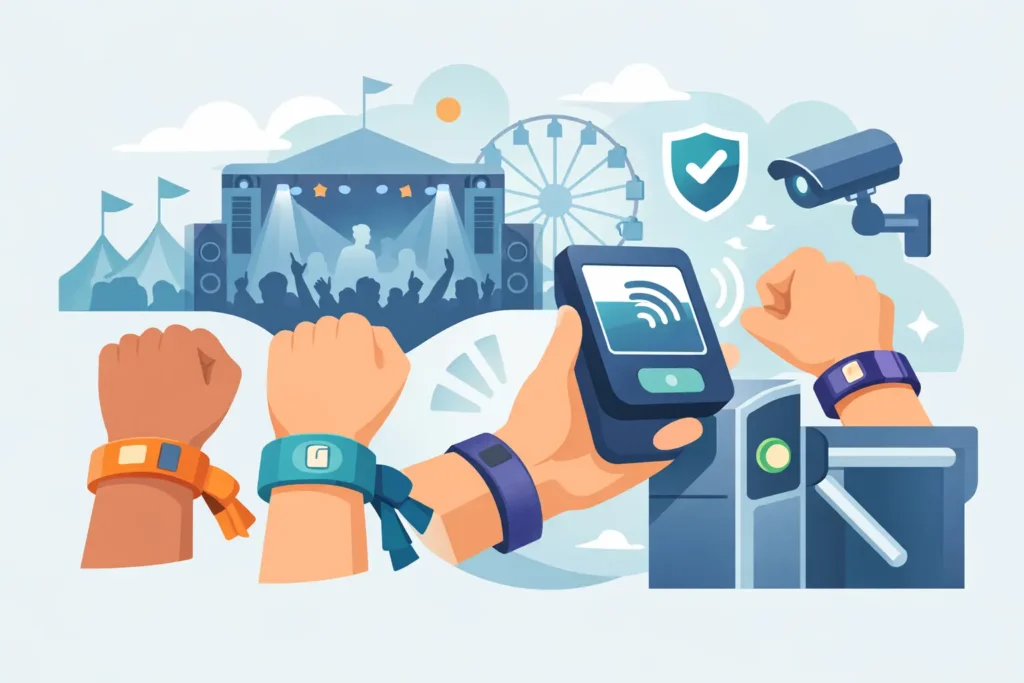
When gates open and the first crowd surge hits, small mistakes get expensive fast. Festival access control wristbands are one of the few event items that affect security, queue speed, staff confidence and patron experience all at once. If the wristband stock tears, the print is unclear, or the colour coding creates confusion, the problem shows up immediately at the entry point.
For festival organisers, venue teams and procurement staff, the right wristband is not just a branding choice. It is a control tool. It helps separate ticket types, identify age-restricted access, manage re-entry, support VIP zones and reduce the risk of transfer or counterfeiting. The best result comes from treating wristbands as part of the event operations plan, not as an afterthought added late in production.
What festival access control wristbands actually need to do
A wristband has a simple job on paper – show who should be where. In practice, it has to do more than that. It needs to stay on for the full event duration, remain easy for security to identify at a glance, and hold up under weather, sweat, dust and constant movement.
That means material choice matters. A one-night community music event may be well served by a straightforward disposable option, while a multi-day festival with camping, licensed areas and premium ticket tiers usually needs a more durable solution. The wrong specification can create bottlenecks, disputes at checkpoints and extra labour for staff who are already under pressure.
Print quality matters just as much as durability. If colours are inconsistent, if numbering is hard to read, or if branding elements blur into the background, your team loses the visual shortcut that makes wristbands useful in the first place. Clear printing and accurate colour matching are not cosmetic details. They support faster decisions at every gate.
Choosing the right festival access control wristbands
The best wristband option depends on your event format, crowd profile and control points. There is no single best style for every festival, and that is where many buying decisions go wrong.
Tyvek-style wristbands are popular for short events because they are cost-effective, lightweight and quick to apply. They work well for day entry, school fairs, local festivals and any event where simple gate control is the main requirement. They are less suited to multi-day use or premium experiences where a stronger look and feel is part of the brief.
Vinyl and plastic wristbands suit longer events and higher handling demands. They are harder to remove without damage and better for festivals where attendees move between zones over several days. Fabric wristbands are often chosen for premium festivals, VIP access and camping events because they offer stronger branding, a more polished finish and better perceived value. They also tend to be kept as souvenirs, which can be a positive if brand presentation matters.
The trade-off is straightforward. As durability and presentation improve, cost usually rises too. For many organisers, the right call is not choosing the most premium option across the board, but matching wristband types to access level. General admission may need one solution, while backstage, staff and VIP areas need another.
Material, closure and wear time
Wear time should guide specification from the start. A six-hour event and a four-day festival create very different demands. Adhesive closures can be ideal for quick issue and tamper evidence on short runs. Locking plastic closures or sealed finishes are stronger for extended wear and more resistant to swapping.
Comfort also matters more than some teams expect. If a wristband is irritating, too stiff or too loose, attendees will fiddle with it, remove it or complain at service points. That creates avoidable friction. A good access wristband should feel secure without becoming a problem by midday.
Colour coding and visual control
Good colour coding speeds up decisions. Security staff should not need to stop and inspect every wrist in detail. Distinct colours for age verification, backstage access, camping, vendor entry and VIP admission help teams process people faster and with less uncertainty.
This only works if the colours are consistent across the full order. For branded events, exact PMS matching is often just as important as operational contrast. If your event has established brand colours, or you need different access tiers to remain clearly distinct under stage lighting or evening conditions, colour control should be discussed before production starts.
Security features worth considering
Not every festival needs high-security features, but many need more than a plain printed band. The right level depends on crowd size, ticket value, alcohol service, re-entry rules and how likely your event is to attract attempts at wristband transfer.
Sequential numbering is a practical addition for stock control and audit purposes. It helps track issue batches and can support incident review if needed. Barcodes or QR integration may suit events that want a stronger link between physical access control and digital check-in systems, though this depends on scanner reliability, staffing and network conditions on site.
Custom print elements can also reduce duplication risk. Unique artwork, event-specific text, date identification and tightly controlled colour combinations make unauthorised copying harder. None of these features replaces competent gate management, but they make life easier for the teams doing the checking.
There is always a balance to strike. More security features generally mean more setup and a higher unit cost. For lower-risk events, overengineering the wristband can waste budget better spent on staffing or signage. For larger festivals, under-specifying the product can cost far more once gates are open.
Why lead times matter more than most organisers think
Wristbands are often ordered late because they look simple. That is risky, especially when custom printing, multiple access levels and approvals are involved. If you need artwork setup, colour matching, sample review or split quantities across different attendee groups, production time needs to be built into the event plan.
A dependable supplier should help reduce that admin load, not add to it. Design support, clear proofing, pre-production checks and realistic timing are all part of getting the order right. That matters even more when wristbands need to align with lanyards, ID cards, credential holders or other event identification products being produced at the same time.
For Australian events, timing can tighten quickly around school holidays, major event periods and freight cut-offs. Leaving wristbands to the final week limits your options and increases the chance of compromise on material, print or delivery. The safer move is to lock in specification early, even if final quantities are adjusted closer to the date.
Common buying mistakes with festival access control wristbands
The most common mistake is choosing on price alone. Unit cost matters, especially for large volumes, but the cheapest wristband is not the cheapest option if it slows entry, creates confusion or fails before the event ends.
Another mistake is using too many similar colours. What looks distinct on a digital proof may look nearly identical at dusk or from a few metres away. Security teams need contrast they can read quickly in real-world conditions, not just on a screen.
Late artwork approval is another frequent issue. Every approval delay narrows production and dispatch options. If your event includes sponsors, multiple stakeholders or strict brand guidelines, assign sign-off responsibility early so the process does not stall.
Finally, some teams forget how wristbands interact with the wider event kit. If your staff are wearing branded lanyards, contractors have ID cards, and attendees have wristbands, these products should work together visually and operationally. Buying them in isolation can create mismatched colours, duplicated effort and extra internal admin.
What to ask before placing an order
Before approving production, confirm the basics properly. How long will the band be worn? Is it for one access point or several? Does it need to resist tampering, moisture or rough handling? Will your staff identify access by colour alone, or do you need print, numbering or coded data as well?
Then look at the practical side. Ask how artwork will be checked, whether PMS colours can be matched, what turnaround is realistic, and what happens if you need design help or a pre-production sample. These are not minor questions. They determine whether the wristbands arrive fit for purpose or simply arrive.
For many organisers, the easiest path is working with a supplier that can manage the full workflow from design through to delivery. That saves time internally and reduces the number of moving parts before event day. It is one reason buyers often consolidate wristbands with other identification and promotional print items rather than sourcing each product separately.
Lotsa Lanyards works with organisations that need exactly that kind of support – clear quoting, dependable turnaround, strong print quality and customisation that does not create extra hassle for the buyer.
The right wristband should make your event easier to run. If it speeds up the gate, helps your staff make fast calls and still looks the part, it is doing more than holding a place on someone’s wrist.