

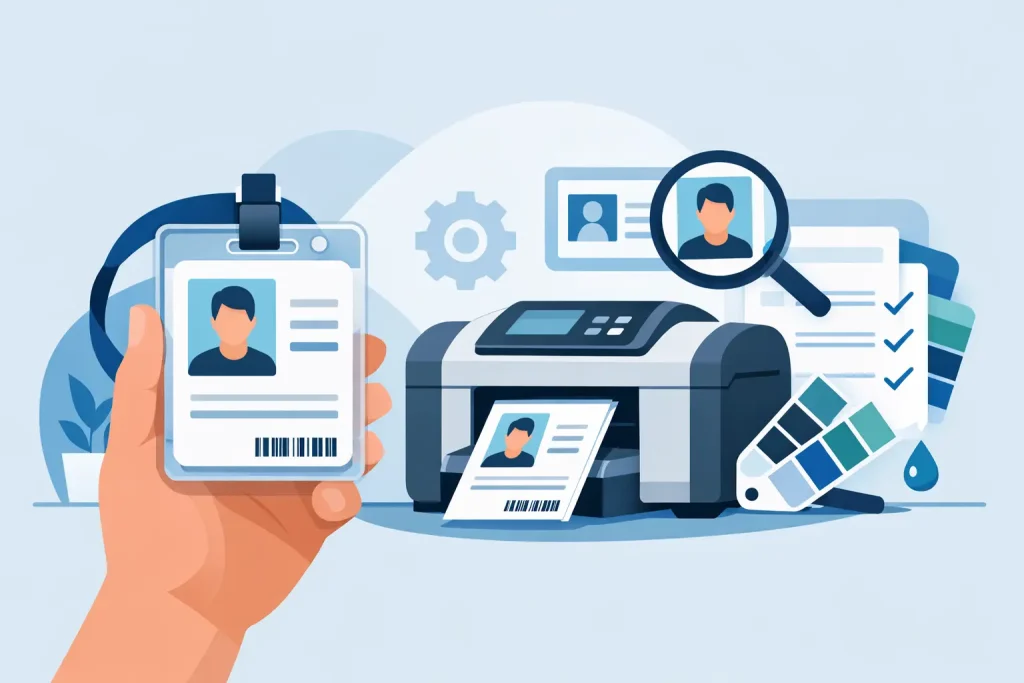
A badge that smudges after a week, clips poorly to clothing, or misses your brand colours does more than look cheap – it creates friction every day. Staff badge printing is a small purchasing decision with a very visible result, especially in offices, schools, healthcare settings, retail, hospitality and events where identification needs to be clear, durable and consistent.
For most organisations, the challenge is not whether to issue badges. It is how to get them printed properly, with the right card, holder and attachment, without turning a simple admin task into a drawn-out project. That is where the details matter.
What good staff badge printing actually needs to do
A staff badge has a practical job first. It needs to identify the wearer quickly, hold up to regular use and fit the environment it will be used in. In some workplaces, that means a simple photo ID card worn on a lanyard. In others, it may need to work with access control systems, sit inside a rigid holder, or be reissued regularly for contractors and temporary staff.
The visual side matters as well. Your badge is often worn at reception desks, trade counters, front-of-house roles and events where staff are representing your brand face to face. If colours are off, logos are fuzzy or layouts feel cramped, people notice. Buyers who manage branded materials already know this. The issue is making sure the final product matches the approved artwork and arrives on time.
That is why badge printing should never be treated as card printing alone. The card, print method, holder and attachment all need to work together.
Choosing the right card for staff badge printing
The first decision is usually the badge itself. Most staff badges are produced on plastic or PVC cards because they offer a clean finish, good print quality and enough durability for daily wear. They suit permanent employees, front desk staff, teachers, visitors and event crews.
If the badge needs to carry a photo, job title, department and logo, a standard PVC card is often the most efficient choice. It presents well, handles full-colour print cleanly and feels familiar to staff because it is similar in size and thickness to a bank card.
Where it gets more specific is use case. A school issuing ID cards to staff may want easy visual recognition and strong durability. A corporate office may need a professional finish with strict brand compliance. A venue may need cards that pair with holders and reels for quick scanning. The right answer depends on how the badge is used day to day, not just what looks good in a proof.
If access functionality is involved, that needs to be addressed early. Printing and encoding are different requirements, and the production setup should reflect that from the start. It saves time, avoids rework and reduces the risk of ordering a card that looks right but does not function properly.
Design choices that affect daily use
A lot of badge problems start in the artwork stage. The badge may be technically printable, but not easy to read once it is hanging from a lanyard or clipped to a shirt. Good layout is not about squeezing in every detail. It is about making the right information visible at a glance.
For most staff badges, the essentials are straightforward: logo, staff name, photo if required, role or department, and sometimes a company or school name if the logo alone is not enough. The hierarchy matters. Names should not compete with oversized logos, and photos should not be so small that they lose their purpose.
Brand colour matching is another area where buyers often get caught. A near match may be acceptable on some internal print jobs, but on customer-facing ID products it can make your materials feel inconsistent. If your business has established PMS colours, matching them accurately across lanyards, cards and holders creates a more polished result. It also matters when multiple departments or sites are ordering at different times and still need the same finish.
Typography deserves more attention than it usually gets. Thin fonts, low contrast and cramped text fields create trouble quickly. Staff badges are viewed in motion, under mixed lighting, and often from a short distance across a counter or foyer. Clarity should win every time.
The badge is only part of the system
One of the most common buying mistakes is focusing entirely on the printed card and leaving the accessory decision until later. In practice, the holder, reel, clip or lanyard changes how the badge performs.
A rigid holder works well where extra protection is needed, especially in environments where cards are used daily and need to stay flat and presentable. A soft holder can be more flexible and cost-effective for certain workplaces, especially where cards may be replaced more often. Reels and clips can suit staff who need to scan or show a card regularly without removing it. Lanyards remain a strong option for visibility, convenience and branding, particularly at events, schools, larger workplaces and customer-facing sites.
This is where an end-to-end supplier makes a difference. Ordering the card from one place, the holder from another and the lanyards elsewhere may look cheaper on paper, but it often creates mismatched sizes, delayed delivery and extra admin. If you are managing procurement across multiple items, having the full setup planned together usually saves time and avoids problems.
Turnaround time matters more than most teams expect
Badge orders are often triggered by a practical deadline – a new site opening, a conference, an intake of new staff, a compliance update or a rebrand rollout. That means speed matters, but only if it is paired with accuracy.
Fast staff badge printing is useful when the supplier can still manage proofs, confirm specifications and keep production moving without confusion. Rushed orders with unclear artwork or missing approvals can create bigger delays than a slightly longer but controlled process.
For procurement teams and office administrators, predictability is the real value. You need to know when artwork is due, whether samples are recommended, what production timing looks like and when dispatch is expected. A supplier with strong deadline management reduces internal follow-up and gives you more confidence when you are coordinating multiple moving parts.
In Australia, timing can become even more important when deliveries need to reach different states or regional locations. Building in enough lead time helps, but so does working with a team that is used to managing production schedules properly.
Quality versus price is not a simple trade-off
Every buyer has a budget. That does not mean the cheapest badge is the best value. If cards crack, print wears off, colours vary between batches or accessories fail early, the replacement cost and admin burden quickly erase the saving.
At the same time, not every workplace needs a premium specification. A short-term contractor card has different demands from a permanent staff ID card used every day for a year or more. The smart approach is to match the spec to the application.
That is where quoting matters. Instead of over-ordering on features you do not need, or under-ordering and replacing stock too soon, a clear quote process helps define what the badge needs to do. Materials, print finish, quantity and accessories all influence price. So does whether you are ordering a one-off run or planning repeat batches.
A reliable supplier should be able to guide that conversation quickly. If you already know exactly what you need, the process should move fast. If you do not, design support and pre-production guidance can prevent expensive guesswork.
How to make staff badge printing easier to manage
The simplest badge projects usually start with better information. If you want a cleaner ordering process, prepare the staff list, confirm whether photos are needed, lock down the approved branding and decide how badges will be worn before requesting a quote.
It also helps to think beyond the first batch. Will new starters need the same badge format every month? Do contractors require a different layout or colour? Will card holders and lanyards need replenishment separately? Planning for repeat orders makes the initial setup more useful and reduces friction later.
For organisations managing multiple branded items, consolidating print and accessory supply can save a surprising amount of time. Cards, lanyards, reels, clips and holders are closely related products. Treating them as one system makes the rollout cleaner and the result more consistent.
Lotsa Lanyards works with organisations that need exactly that kind of practical support – from design and sampling through to production and delivery – especially when colour accuracy, value and turnaround all need to line up.
Staff badge printing works best when nothing is left to chance
The strongest badge programs are rarely complicated. They are just well specified. The card suits the job, the print is clear, the colours are right, the attachment makes sense, and the order arrives when promised.
If your team is about to reissue IDs, onboard new staff or prepare for an event, it is worth slowing down just long enough to get the specification right. A well-made badge does its job quietly every day, and that is exactly the point.